

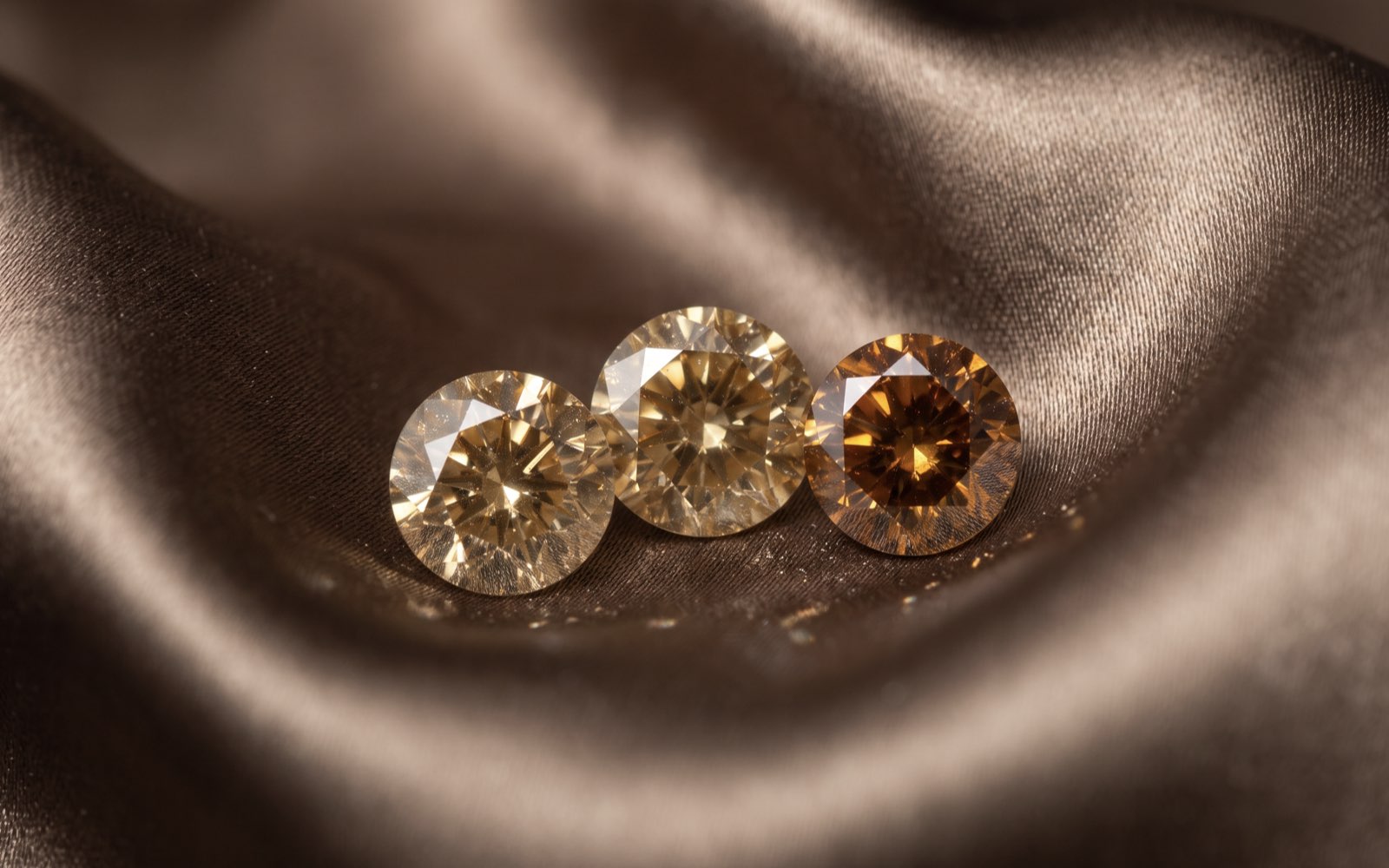
Brown diamonds are among the most distinctive members of the natural colored diamond family. Their captivating palette spans delicate champagne and honey hues to warm amber, cognac, earthy brown, and deeper reddish-brown tones. Each shade possesses a character of its own, offering a different expression of natural diamond beauty.
For many years, the ideal diamond was defined by its lack of color. The closer a stone came to absolute colorlessness, the more desirable it was considered. Brown diamonds, despite their natural beauty and geological rarity, were once regarded as less desirable and were frequently overlooked in fine jewelry.
Perceptions have evolved considerably. Today, brown diamonds are increasingly appreciated for their warmth, individuality, and understated elegance. Their natural variations offer an appealing alternative to traditional colorless diamonds, particularly for those who value distinctive gemstones and jewelry with a more personal character.
Understanding brown diamonds involves more than recognizing their color. Their formation, color grading, internal characteristics, and the subtle differences between their various shades all contribute to their appeal.
FORMATION
Like all natural diamonds, brown diamonds form deep within the Earth's mantle under conditions of extraordinary pressure and temperature. Their crystal structure consists of carbon atoms arranged in a highly organized three-dimensional lattice.
The brown coloration in natural diamonds is primarily associated with distortions in this crystal structure, commonly resulting from geological stress and plastic deformation during the diamond's formation and journey toward the Earth's surface.
These structural irregularities create internal brown graining and defects that influence how light is absorbed and transmitted through the diamond. The resulting appearance may range from a delicate, barely perceptible brown tint to a rich and pronounced color.
Unlike yellow diamonds, whose coloration is commonly associated with nitrogen impurities, the brown hues of many natural diamonds are primarily linked to changes within their crystal lattice.
The geological conditions responsible for these variations are part of what makes each natural brown diamond unique. No two stones exhibit precisely the same combination of hue, tone, and saturation.
NATURAL BROWN DIAMONDS' QUALITY FACTORS
COLOR
Color is the defining characteristic of a brown diamond and the primary element of its individual beauty. Natural brown diamonds display a remarkable spectrum of hues, ranging from delicate champagne and honey tones to rich amber, cognac, and deeper reddish-brown shades.
Their appearance is determined by three important characteristics: hue, tone, and saturation. Together, these attributes establish the depth, intensity, and overall personality of the diamond.
The Brown Diamond Color Spectrum
Brown diamonds are not a single, uniform color. Their hues may carry subtle yellow, orange, or reddish undertones, creating considerable variation in their appearance.
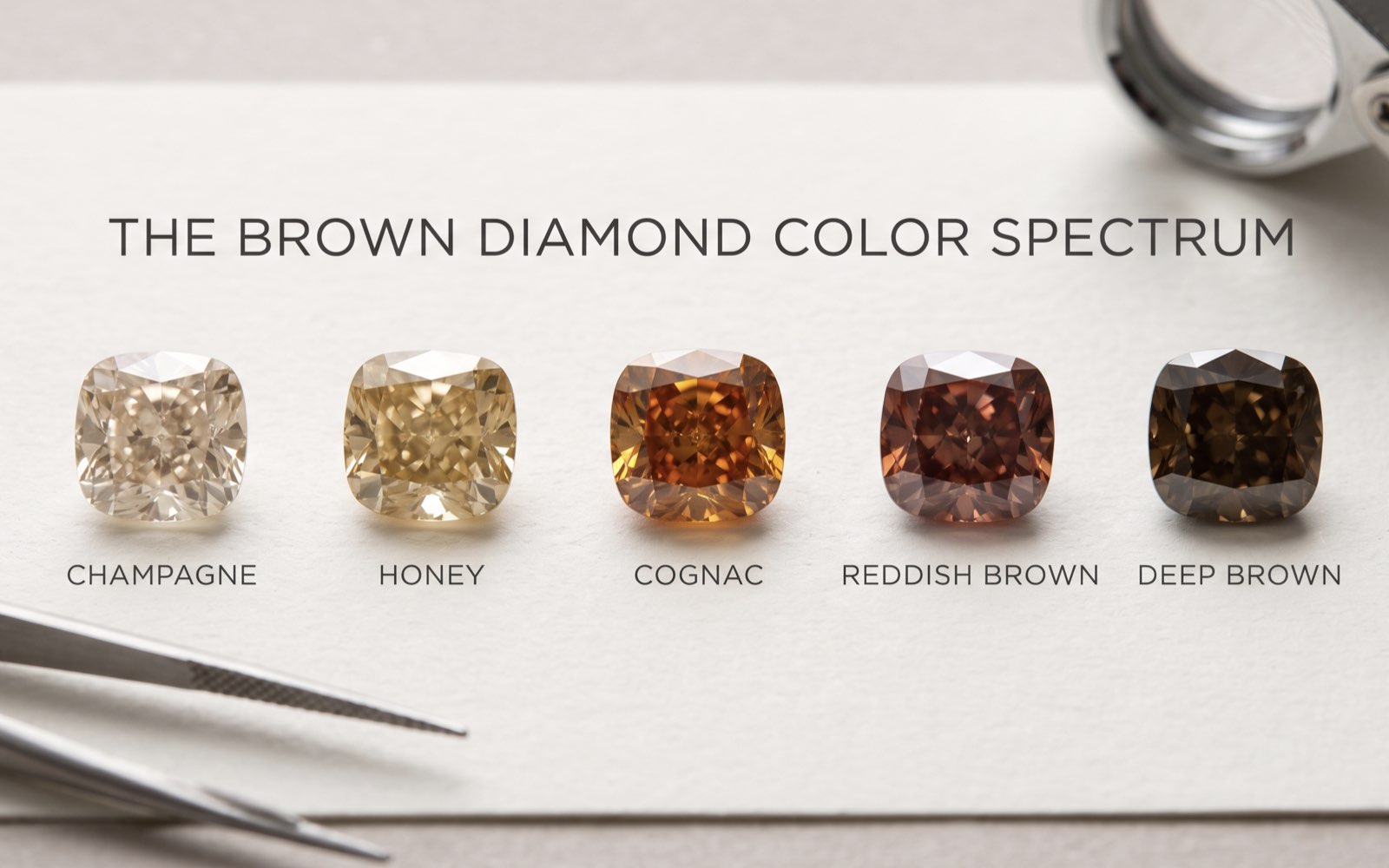
• Champagne: Delicate, light brown hues with soft golden or beige undertones, creating an understated and luminous appearance.
• Honey: Warm golden-brown shades with gentle yellowish or amber undertones.
• Cognac: Rich amber to orangy-brown hues with greater depth and a more pronounced warmth.
• Reddish Brown: Brown diamonds displaying noticeable reddish undertones, giving them a distinctive and deeper color character.
• Deep Brown: More pronounced brown coloration, ranging from dark earthy shades to richly saturated hues.
These names are descriptive trade terms used to communicate a diamond's appearance. They are not official GIA color grades.
Understanding GIA's Fancy Color Diamond Grading System
The Gemological Institute of America (GIA) developed a specialized grading system to evaluate the color of natural fancy-colored diamonds. Unlike conventional diamond color grading, which assesses the relative absence of color, the Fancy Color system evaluates the presence and characteristics of the diamond's color.
Brown diamonds with a relatively subtle body color may remain within the traditional D-to-Z grading range. Those exhibiting a more pronounced color beyond this range are evaluated using the Fancy Color grading system.
GIA uses nine color grade descriptions in its Colored Diamond Grading Reports. These describe the overall appearance of the diamond, taking into consideration its hue, tone, and saturation.
The Nine GIA Fancy Color Grades
| GIA Color Grade | Description |
| Faint | A very subtle color presence that is barely perceptible. |
| Very Light | A light coloration that is visible but remains delicate and subdued. |
| Light | A more noticeable color presence, although the overall appearance remains light. |
| Fancy Light | A distinct color with relatively light tone and moderate color strength. |
| Fancy | A recognizable and more pronounced color appearance with a balanced combination of tone and saturation. |
| Fancy Intense | A strong and concentrated color with greater saturation and visual presence. |
| Fancy Vivid | An exceptionally strong and vivid color appearance, generally associated with high saturation. |
| Fancy Dark | A color characterized by a distinctly dark overall tone. |
| Fancy Deep | A deep and rich color appearance, with substantial depth and color strength. |
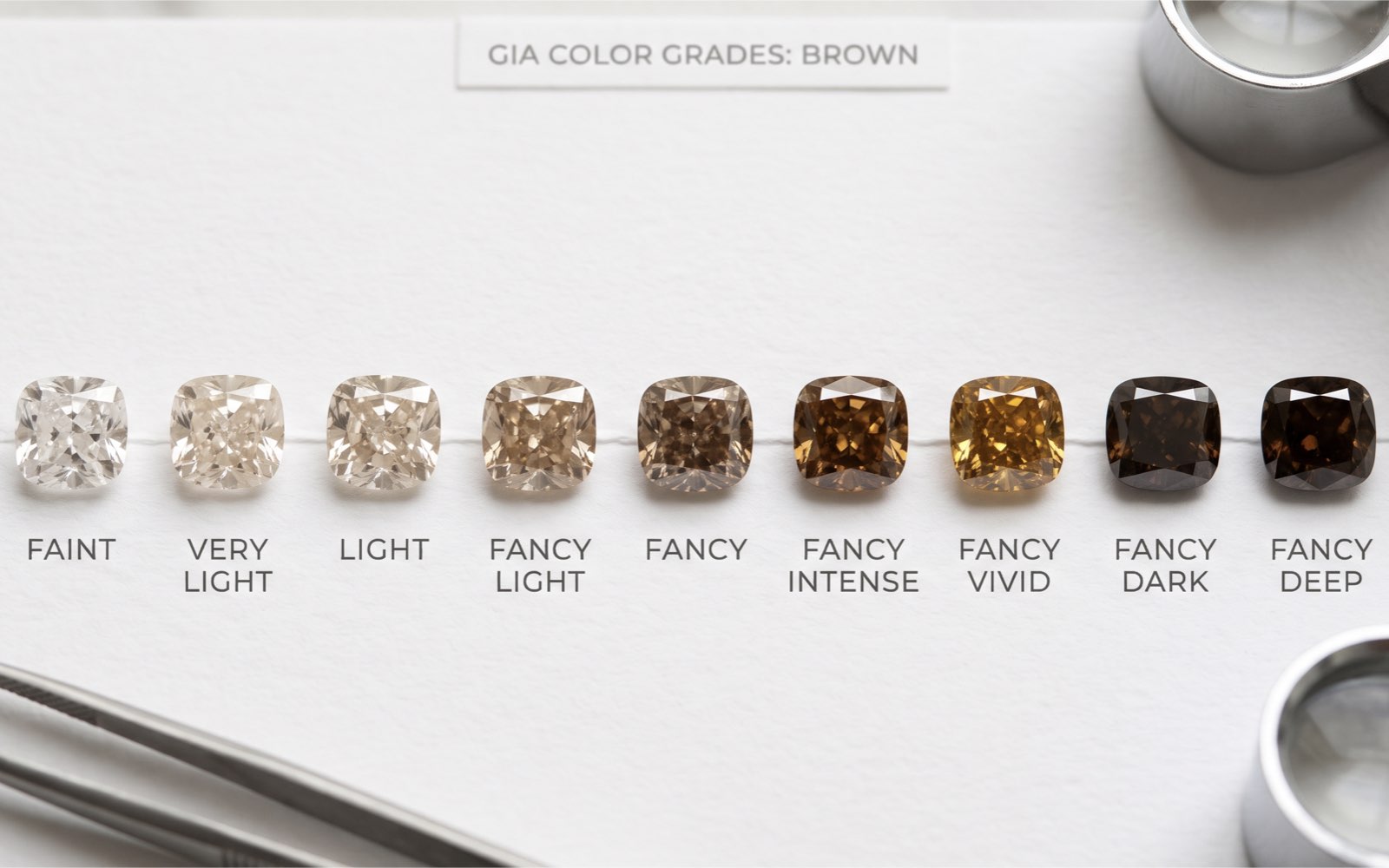
These nine descriptions form the complete GIA Fancy Color grading terminology. They are not necessarily a simple progression of increasing saturation. In particular, Fancy Dark and Fancy Deep describe different aspects of color appearance from Fancy Intense and Fancy Vivid. The appropriate designation depends on the relationship between the diamond's hue, tone, and saturation.
THE HOUSE OF KATE VALERIO
The World of Colored Gemstones
A Fine Colored Gemstone Jewelry House
Discover Kate Valerio ↗Applying the GIA Grading System to Brown Diamonds
For brown diamonds, the dominant hue is brown, although secondary colors may also be present. The complete GIA grading terminology provides a standardized way to describe the strength and character of the diamond's color.
Examples of brown diamond descriptions include Fancy Light Brown, Fancy Brown, and Fancy Dark Brown. The actual grade assigned depends on the diamond's characteristic face-up appearance and the assessment of its color under controlled laboratory conditions.
Hue
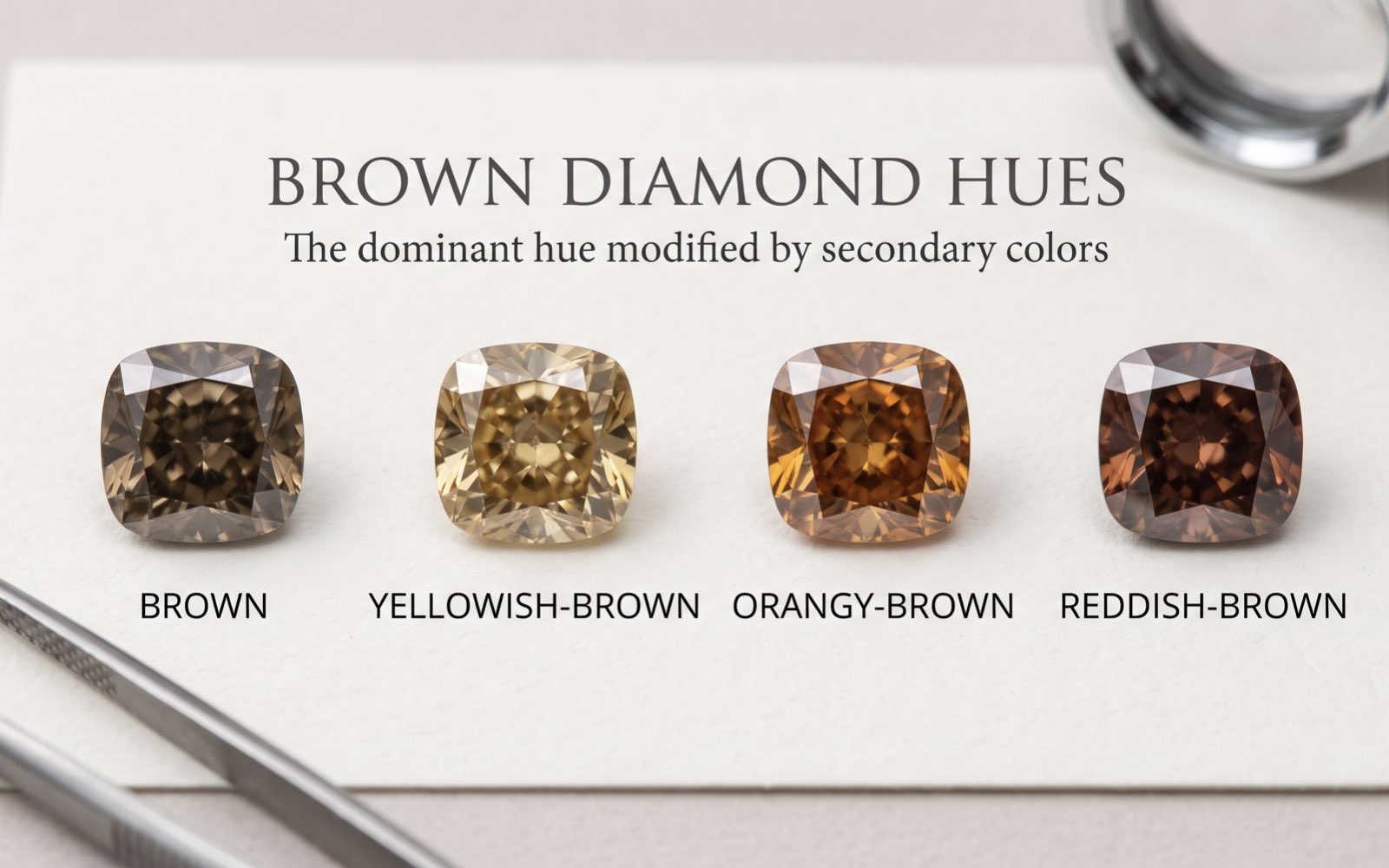
Hue refers to the actual color perceived in the diamond. In brown diamonds, the dominant hue may be modified by secondary colors such as yellow, orange, or red.
A diamond with yellowish-brown undertones may appear more golden and delicate, while one with orangy-brown coloration may display a richer amber character. Reddish-brown diamonds possess another distinctive expression of warmth.
These subtle variations contribute considerably to the individuality of each stone.
Tone
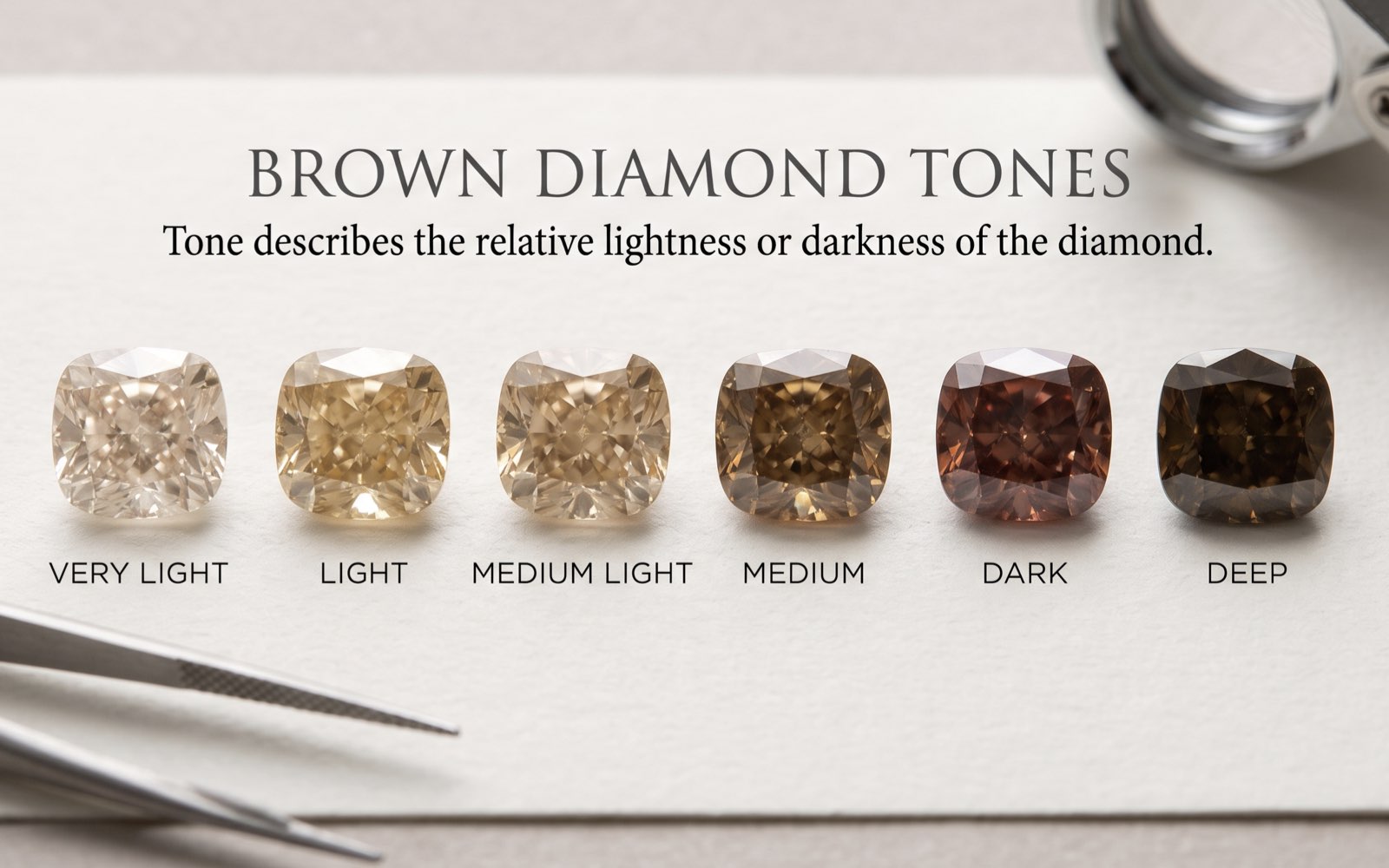
Tone describes the relative lightness or darkness of the diamond.
Brown diamonds occur across a broad range of tones. At one end of the spectrum are very light, delicate stones with a soft champagne appearance. At the other are much darker diamonds with deep, pronounced brown coloration.
Tone plays an important role in determining the overall presence of a brown diamond. Lighter stones offer a more understated elegance, while darker tones can create a richer and more dramatic appearance.
Saturation
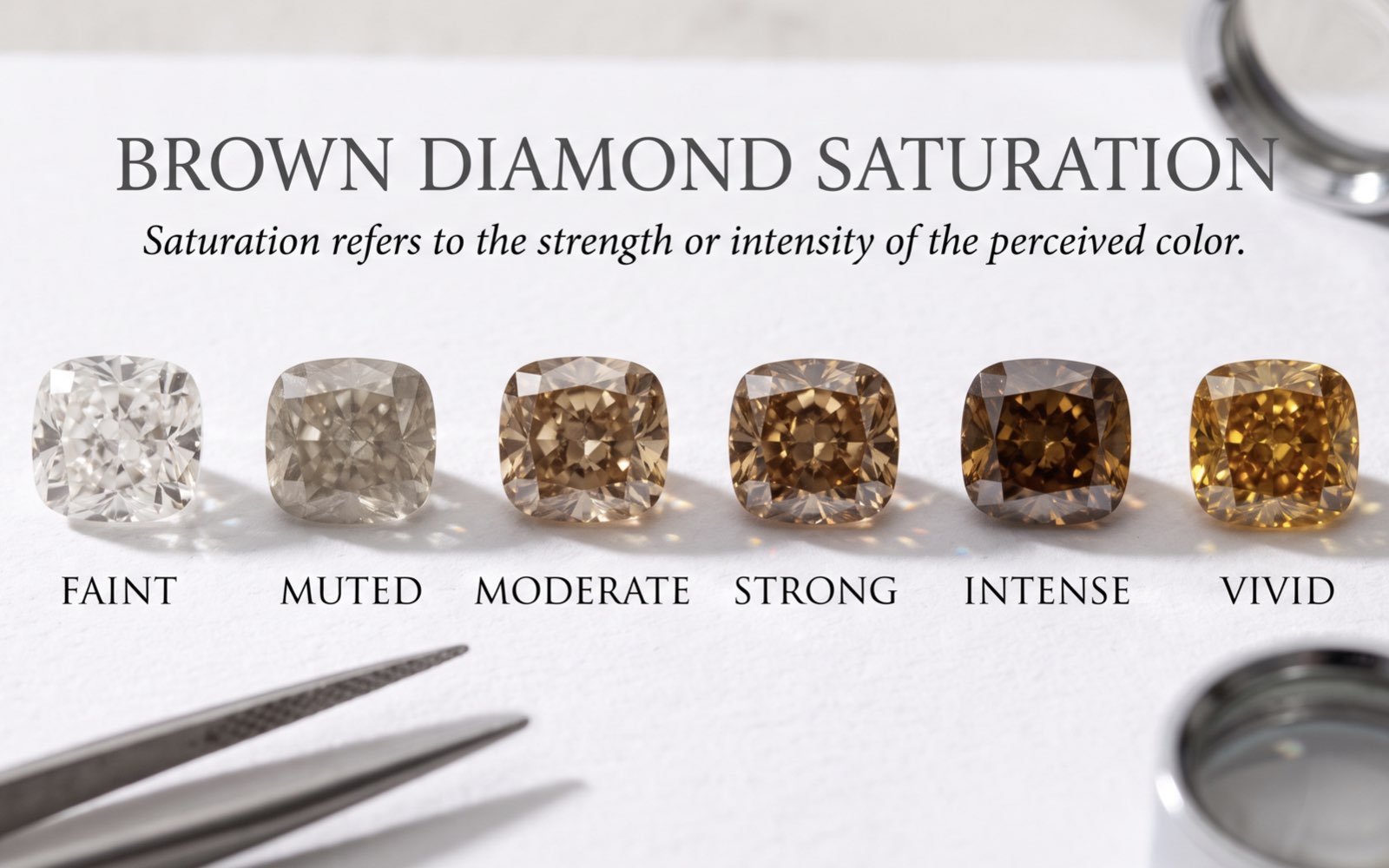
Saturation refers to the strength or intensity of the perceived color.
A diamond with low saturation may appear faint, subdued, or slightly muted. A diamond with stronger saturation displays a more pronounced and concentrated brown hue.
In brown diamonds, the relationship between tone and saturation is particularly interesting. A stone may appear dark without having especially strong color saturation, while another may possess a rich, concentrated brown hue at a relatively lighter tone.
Color Distribution and Overall Appearance
Beyond the official color grade, the distribution of color is another important consideration when appreciating a brown diamond.
Some stones display remarkably even coloration across their face. Others may show areas of stronger or weaker color depending on their natural internal structure and faceting.
The shape and cutting style also influence how the color is perceived. A thoughtfully cut diamond can enhance its natural warmth, emphasize its visual depth, and create an appealing balance between color and brilliance.
Ultimately, the beauty of a brown diamond lies in the harmony of its hue, tone, saturation, and overall appearance.
FEATURED ON TATLER ASIA
Kate Valerio Featured on Tatler Asia
Recognised among Metro Manila’s destinations for custom jewellery.
Discover the Feature ↗CLARITY
Like all natural diamonds, brown diamonds may contain internal characteristics known as inclusions, which formed during their geological development.
These may appear as minute crystals, feathers, clouds, or internal graining. Their number, size, location, and visibility influence the diamond's clarity grade.
In brown diamonds, the depth and strength of the color can sometimes make minor inclusions less noticeable. However, clarity should not be overlooked. Inclusions that interfere with transparency, create a cloudy appearance, or affect structural integrity should be carefully evaluated.
An attractive brown diamond balances its natural color with good transparency and overall visual appeal.
CARAT
Brown diamonds are available in a variety of sizes, from small accent stones to impressive center diamonds.
As with all diamonds, carat refers to weight rather than physical dimensions. Two diamonds of identical carat weight may appear different in size depending on their proportions, depth, and cutting style.
The value of a brown diamond is influenced by several factors, including its color quality, clarity, carat weight, cut, and overall appearance.
Larger diamonds with attractive and evenly distributed color can be particularly desirable, as they offer a greater opportunity to appreciate the depth and character of their natural hues.
CUT
The cut of a brown diamond plays an important role in showcasing its natural color and brilliance.
The proportions and arrangement of its facets influence how light enters, travels through, and exits the stone. A carefully planned cut can enhance the appearance of its color while maintaining an attractive degree of brilliance and light return.
Brown diamonds are fashioned in a variety of shapes, including round brilliant, oval, pear, cushion, radiant, and emerald cuts.
Certain shapes may emphasize color more prominently than others. Step cuts, such as emerald cuts, have broad facets that can reveal body color more clearly. Brilliant cuts, with their numerous smaller facets, create more scintillation and may give the stone a brighter overall appearance.
Fancy shapes and antique-inspired cutting styles can also be particularly appealing for brown diamonds, allowing their natural coloration and individual character to become part of the design.
The ideal cut ultimately depends on the intended appearance of the diamond and the balance between color, brilliance, and proportions.
Begin Your Exclusive Commission
Inspired by the natural beauty of brown diamonds, from delicate champagne hues to rich cognac and deep brown tones, explore the possibilities of custom-designed fine jewelry. Create a distinctive piece that reflects your personal style and appreciation for exceptional gemstones.
Speak with an Advisor
WHY ARE BROWN DIAMONDS GAINING DEMAND?
For generations, the traditional ideal of a diamond was defined by its colorlessness. A D-grade diamond represented the highest position on the conventional color scale, and consumers often aspired to find stones as white and bright as possible.
Today, the definition of desirable diamond color is becoming more expansive.
There is a growing appreciation for diamonds that display natural warmth, subtle variations, and distinctive character. Brown diamonds, once considered less desirable than their colorless counterparts, are increasingly being recognized as an individual expression of fine diamond jewelry.
This growing interest reflects broader changes in how consumers approach luxury, personal style, and the value of natural gemstones.
1. A Shift Toward Individuality
As fine jewelry becomes more personal, consumers are increasingly drawn to gemstones that reflect their own aesthetic rather than conforming to a traditional standard.
Colorless diamonds remain timeless and highly desirable. However, some buyers are now looking beyond conventional color grades and considering stones with warmer, more distinctive appearances.
Brown diamonds offer precisely this quality. Their natural variations mean that each stone has its own character, allowing the wearer to select a diamond that feels individual rather than conventional.
2. A Preference for Warmth and Understated Luxury
The warm palette of brown diamonds offers an alternative to the brilliant, icy-white appearance traditionally associated with diamond jewelry.
Their earthy and golden undertones can create a softer, more understated form of luxury. Depending on the shade, they may appear romantic, vintage-inspired, contemporary, or quietly sophisticated.
Brown diamonds also complement a wide range of precious metals, particularly yellow gold and rose gold, allowing their natural warmth to become an integral part of a jewelry design.
3. An Attractive Alternative in Diamond Selection
Another consideration is value.
Compared with many other fancy-colored diamonds, brown diamonds are generally more accessible. Lighter brown diamonds within the D-to-Z scale may also offer an opportunity for buyers to consider a larger stone or a different design while working within a particular budget.
However, value varies considerably depending on the diamond's grade, color quality, rarity, size, and overall appearance. A particularly attractive Fancy Brown diamond should not be assumed to have the same pricing considerations as a lower-color D-to-Z diamond.
The increasing interest in brown diamonds is therefore not simply about finding a less expensive alternative. It is also about appreciating a different kind of diamond beauty.
A Changing Appreciation of Diamond Beauty
The market is not abandoning colorless diamonds. Rather, the idea of what makes a diamond desirable is becoming more diverse.
The growing attention given to champagne, cognac, and other naturally brown-hued diamonds reflects a willingness among consumers to explore beyond the traditional white diamond. Brown diamonds are becoming an increasingly considered choice for those who appreciate authenticity, individuality, and the natural character of gemstones.
In this evolving landscape, brown diamonds have found a place of their own in fine jewelry, offering a distinctive interpretation of luxury that is both warm and enduring.
TREATMENT
Natural brown diamonds generally derive their color from structural irregularities within their crystal lattice.
However, certain treatments can alter the color of a diamond. One notable process is High Pressure High Temperature (HPHT) treatment, which can reduce or remove brown coloration in certain diamonds, resulting in a lighter or colorless appearance.
Other methods may also be used to modify a diamond's color, depending on its characteristics and the intended result.
It is therefore important to establish whether a diamond's color is natural or the result of treatment.
A reputable gemological laboratory, such as the Gemological Institute of America (GIA), can assess the diamond and provide information regarding its color origin. A GIA Colored Diamond Grading Report includes an evaluation of its color and whether that color is natural or treated.
FOR THE EXCEPTIONAL WOMAN
Discover Brown Diamond Fine Jewelry
Exceptional Gemstones. Distinctive Designs. Individuality in Every Creation.
Explore Kate Valerio
CARE AND CLEANING
Diamond is the hardest naturally occurring mineral, measuring 10 on the Mohs scale. Despite its exceptional hardness, it is not indestructible. Diamonds have cleavage directions within their crystal structure and may chip or fracture when subjected to a sharp impact.
Brown diamonds require the same care and attention as other diamonds to preserve their brilliance and protect their settings.
For regular cleaning, use warm water, mild soap, and a soft-bristled toothbrush to gently remove accumulated dirt and oils. Rinse carefully and dry with a soft, lint-free cloth.
Avoid abrasive household cleaners and unnecessary exposure to harsh cleaning methods. Ultrasonic and steam cleaners are best left to jewelry professionals, who can first inspect the diamond and its setting.
With proper care and regular inspection of its mounting, a brown diamond can be treasured and enjoyed for generations.
Gemological References: Gemological Institute of America (GIA). Image for illustrative purposes.
Images for illustrative purposes.
Begin Your Exclusive Commission
Inspired by the natural beauty of brown diamonds, from delicate champagne hues to rich cognac and deep brown tones, explore the possibilities of custom-designed fine jewelry. Create a distinctive piece that reflects your personal style and appreciation for exceptional gemstones.
Speak with an AdvisorKATE VALERIO SIGNATURE COLLECTION
AGILA
Strength. Grace. Legacy.
Inspired by the eagle, a symbol of power, freedom and resilience, the Agila Signature Collection celebrates courage, achievement and enduring prestige. Each creation in solid gold reflects bold elegance and the spirit of exceptional individuals.


